Non-Native Hawkweed Species
Hieracium spp.
Family: Asteraceae
Weed class: No Class
Year Listed: 2002
Native to: Europe
Is this Weed Toxic?:
not known to be
Legal listings:
Non-native hawkweeds and their hybrids are on the Washington State quarantine list. It is prohibited to transport, buy, sell, offer for sale, or distribute plants or plant parts of quarantined species into or within the state of Washington or to sell, offer for sale, or distribute seed packets of seed, flower seed blends, or wildflower mixes of quarantined species into or within the state of Washington. Please see WAC 16-752 for more information on the quarantine list. For questions about the quarantine list, contact the Washington State Department of Agriculture's Plant Services Program at (360) 902-1874 or email PlantServices@agr.wa.gov.
Why Is It a Noxious Weed?
Hawkweeds are prolific seed producers, weedy and capable of hybridizing with many exotic and possibly native species. Hawkweeds are aggressive competitors of pasture, range and native plant species.
How would I identify it?
General Description
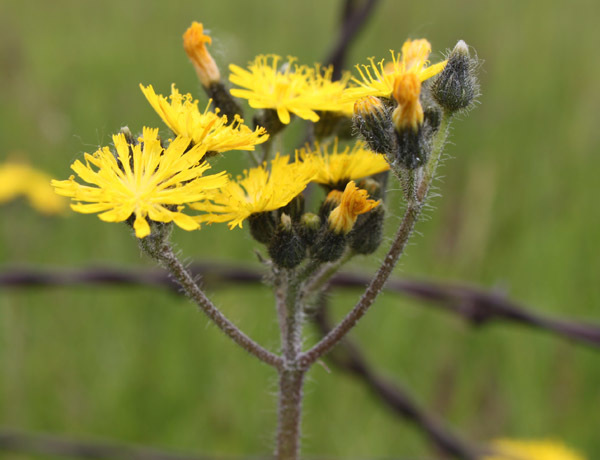
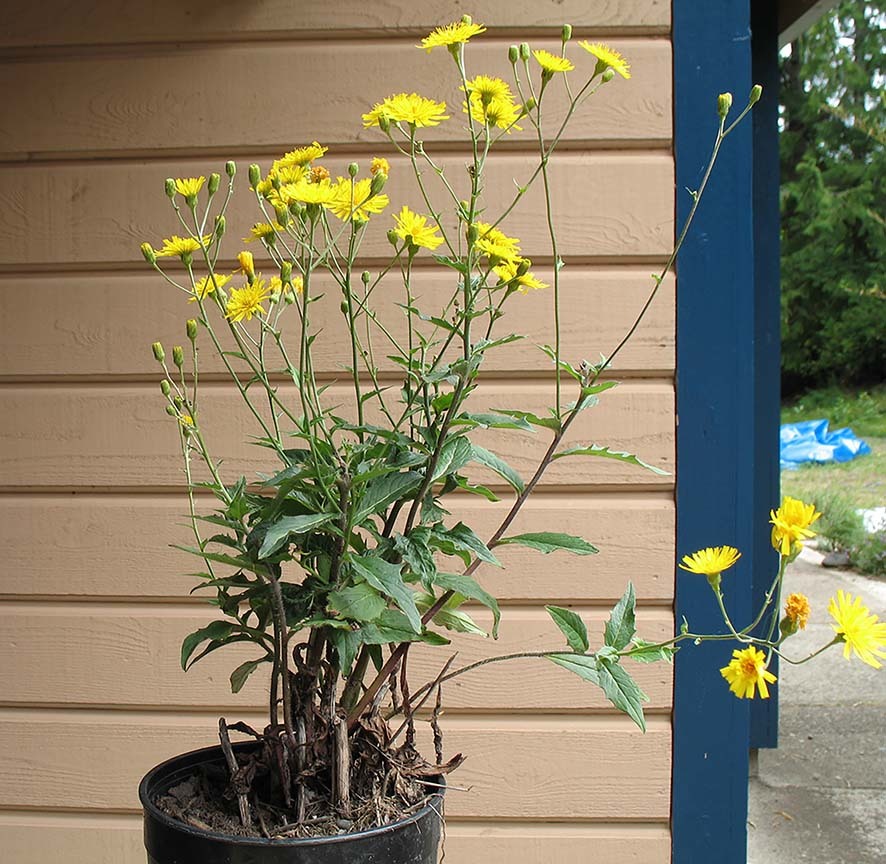
Hawkweed species are perennial herbaceous plants that have flowerheads of ray (ligulate) flowers and have a milky latex in their stems. Most non-native hawkweed species have yellow flowers.
Flower Description
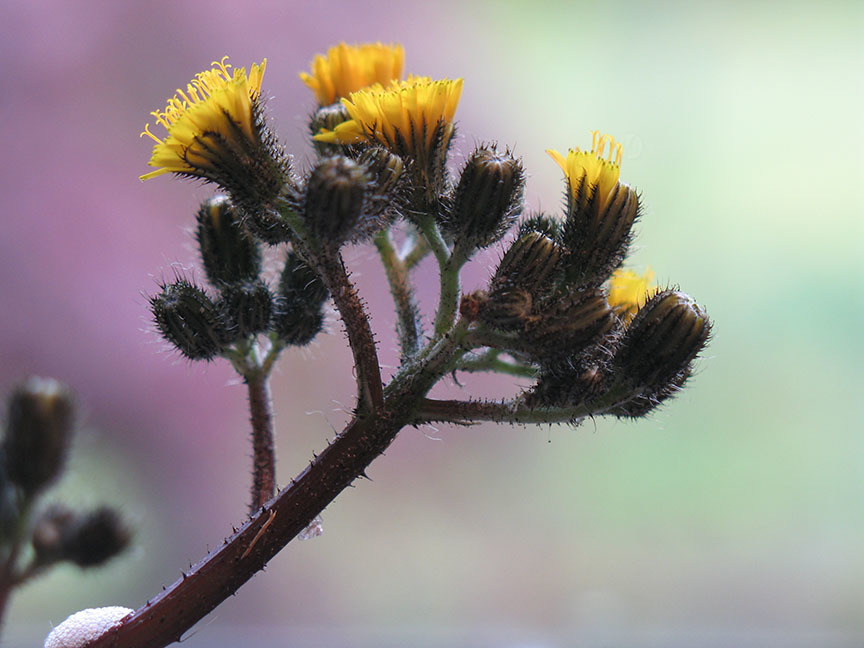
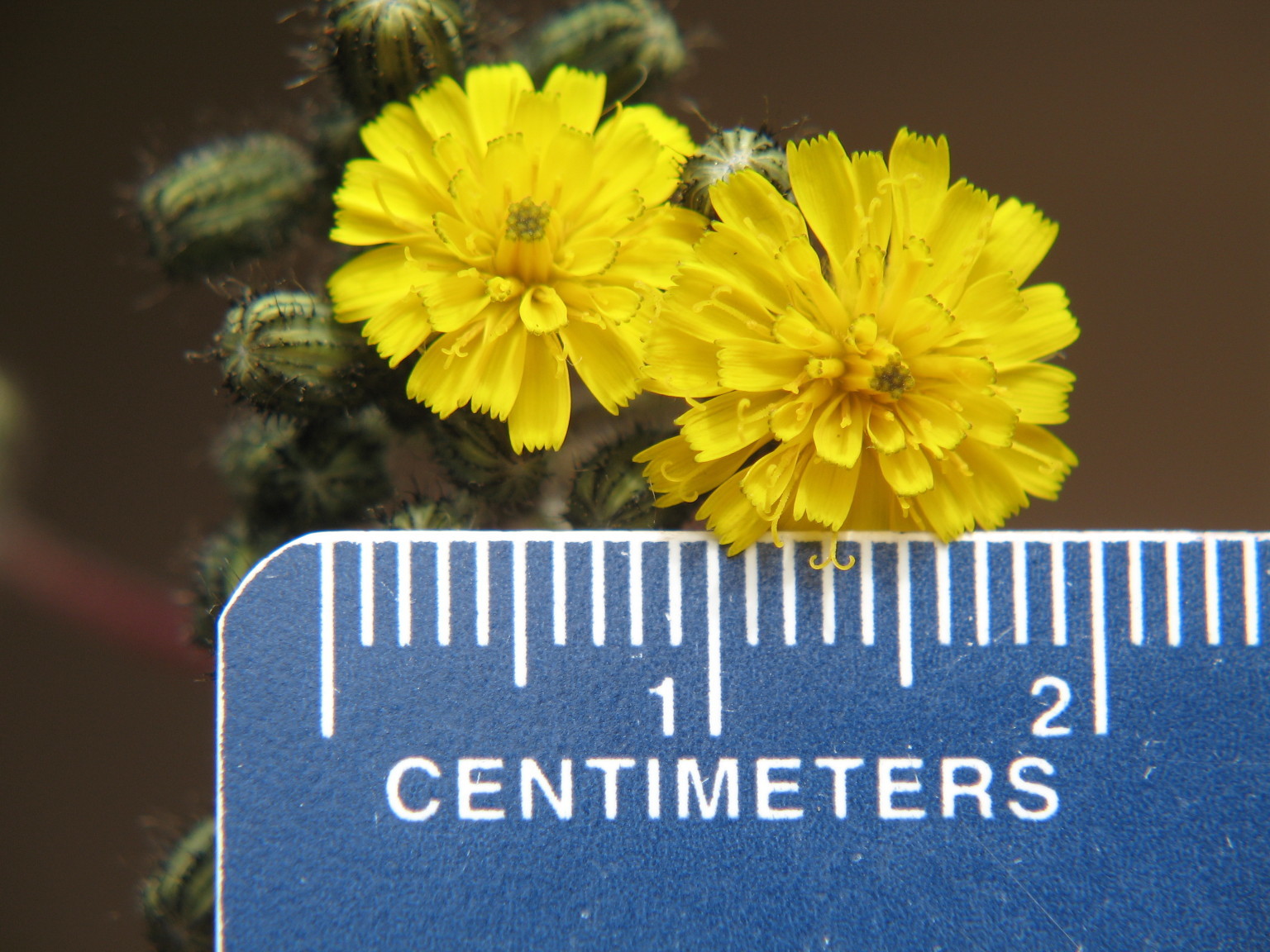
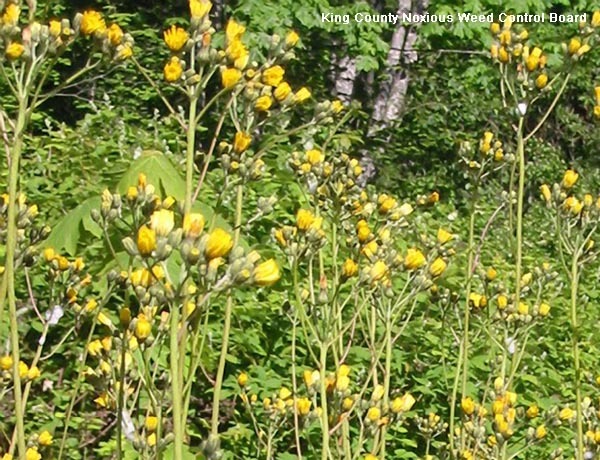
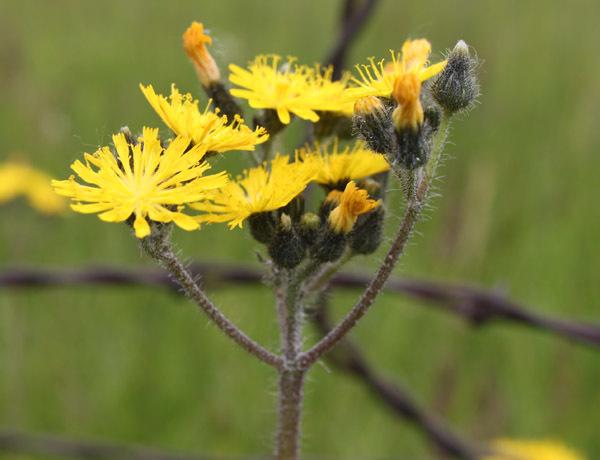
Small, yellow, dandelion-like flowers that grow in clusters at the tops of long stems.
Leaf description
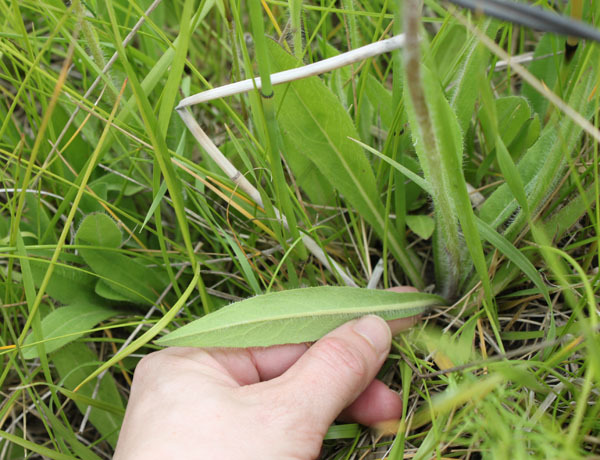
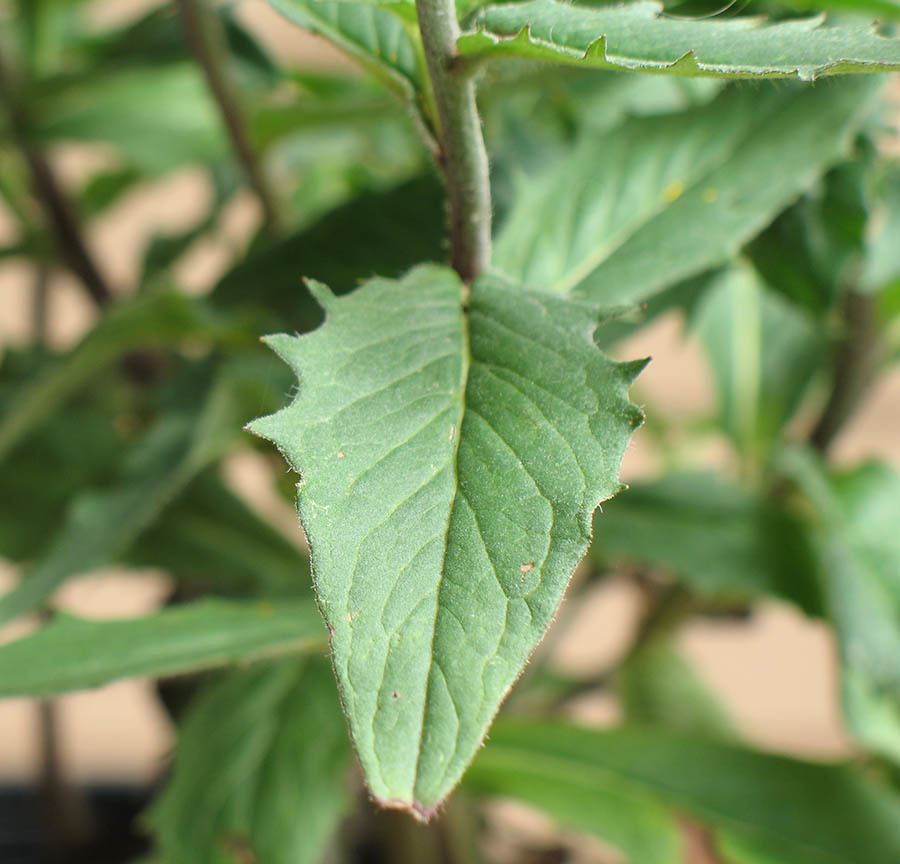
Mostly or entirely basal leaves, which are usually lance or arrow shaped, depending on the species. Many species have small hairs on both sides of the leaf, or just on the underside.
Stem description
Most species are lightly branching, and have slender stems
Fruit Seed Description
Very small, dark, oval seeds hang from a fluffy white pappus, like a dandelion seed.
May Be Confused With
This listing excludes native hawkweed species: houndstongue hawkweed (Hieracium cynoglossoides), long-beaked hawkweed (Hieracium longiberbe), narrow-leaved hawkweed (Hieracium umbellatum), slender hawkweed (Hieracium gracile), western hawkweed (Hieracium albertinum), white-flowered hawkweed (Hieracium albiflorum) and woollyweed (Hieracium scouleri).
Where does it grow?
Mostly in open and sunny disturbed areas, like forest clearings, fields, pastures, and abandoned farmland and lots
Please click here to see a county level distribution map of all other hawkweed species in Washington.
How Does it Reproduce?
Plants can spread by seed as well as by stolons and rhziomes. Modes of spread may differ between species.
How Do I Control It?
Small populations can be dug out, removing the entire root. Plants that are flowering should be put in a trash bag, to prevent the seeds from ripening and spreading. Plants will regrow after being cut or mowed. Selective herbicides can be used, especially if desired grass species are promoted in tandem. Establishing a healthy stand of desired vegetation is important to prevent the spread of hawkweed species.
For More Information
Pierce County NWCB Fact Sheet on Hawkweed Spp.
Control Options for Hawkweed Spp. from King County NWCB
For more information on non-native hawkweeds listed as noxious weeds, see our page on the meadow subgenus (Pilosella) and the wall subgenus (Hieracium).
Additional Photos