Purple nutsedge
Cyperus rotundus
Family: Cyperaceae
Weed class: No Class
Native to: Europe, Asia, Africa
Is this Weed Toxic?:
Not known to be
Legal listings:
This plant is on the Washington State quarantine list. It is prohibited to transport, buy, sell, offer for sale, or distribute plants or plant parts of quarantined species into or within the state of Washington or to sell, offer for sale, or distribute seed packets of seed, flower seed blends, or wildflower mixes of quarantined species into or within the state of Washington. Please see WAC 16-752 for more information on the quarantine list. For questions about the quarantine list, contact the Washington State Department of Agriculture's Plant Services Program at (360) 902-1874 or email PlantServices@agr.wa.gov.
Why Is It a Noxious Weed?
This plant is on the Washington State quarantine list. It is prohibited to transport, buy, sell, offer for sale, or distribute plants or plant parts of quarantined species into or within the state of Washington or to sell, offer for sale, or distribute seed packets of seed, flower seed blends, or wildflower mixes of quarantined species into or within the state of Washington.
How would I identify it?
General Description
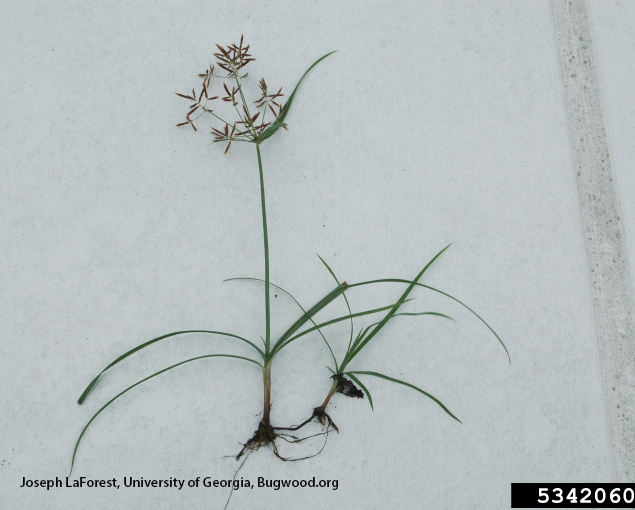
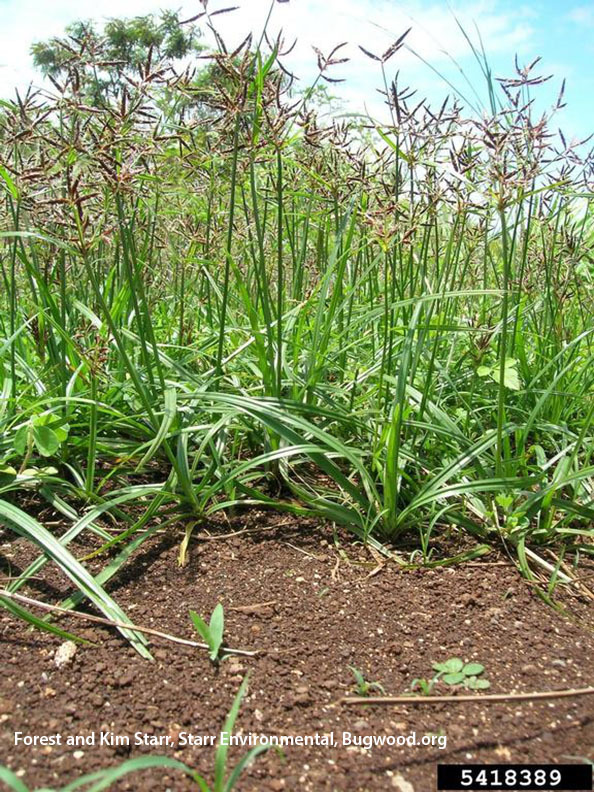
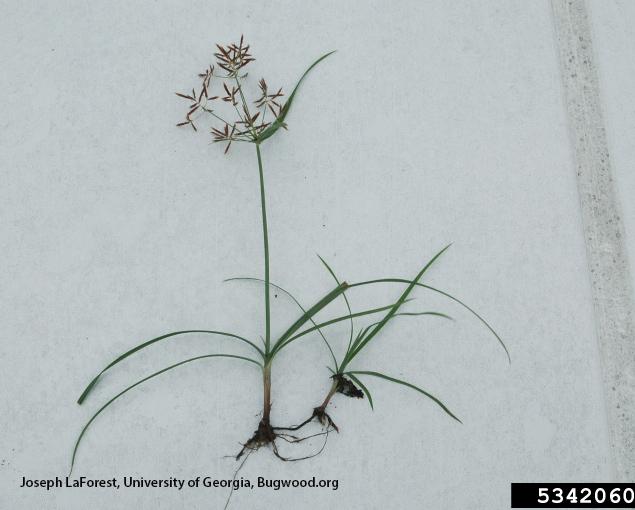
This is a perennial grass-like plant that can grow up to 4 feet tall.
Flower Description
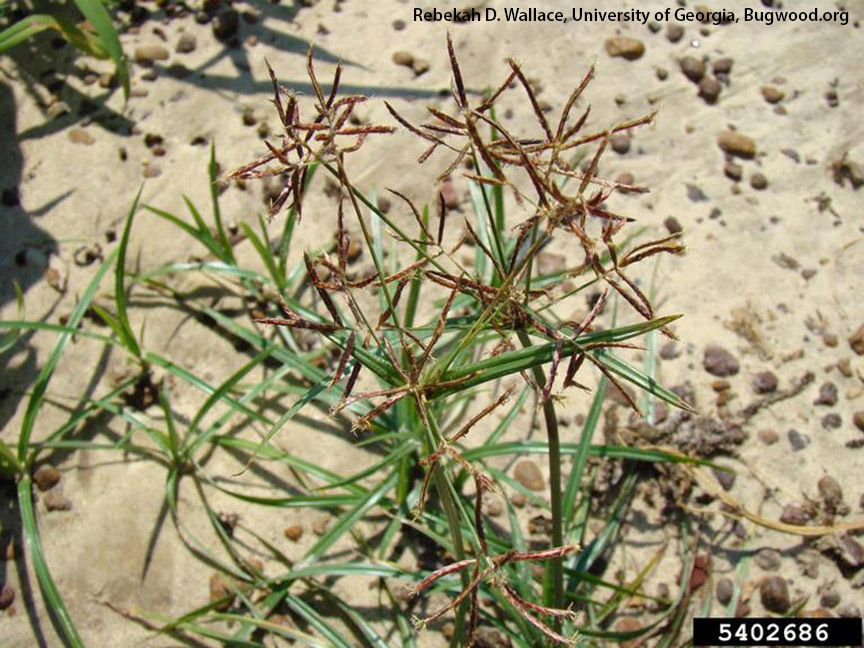
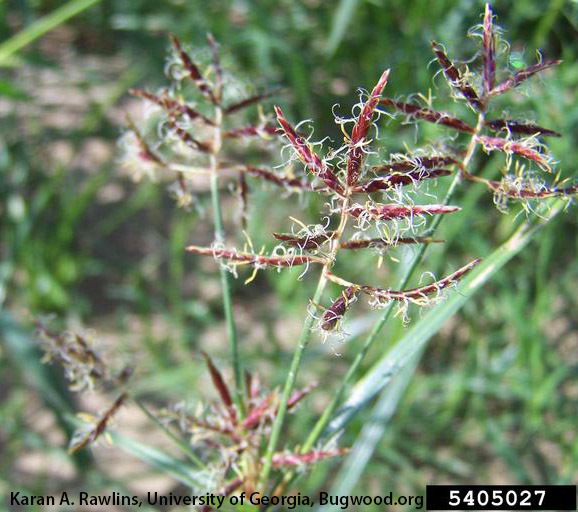
The brown inflorescences spread out from stems at the top of the plants. Each flowering section whorls out in a way that can resemble a firework
Leaf description
The leaves are long and grass blade like. They grow in small groups from near the soil surface
Stem description
The flowering stem is triangular, and taller than the leaves.
Fruit Seed Description
Brown, 3 edged to oval shaped seeds, with a stout stem on one end
Where does it grow?
Prefers moist soil, and can survive in some shade, but does better in sun.
How Does it Reproduce?
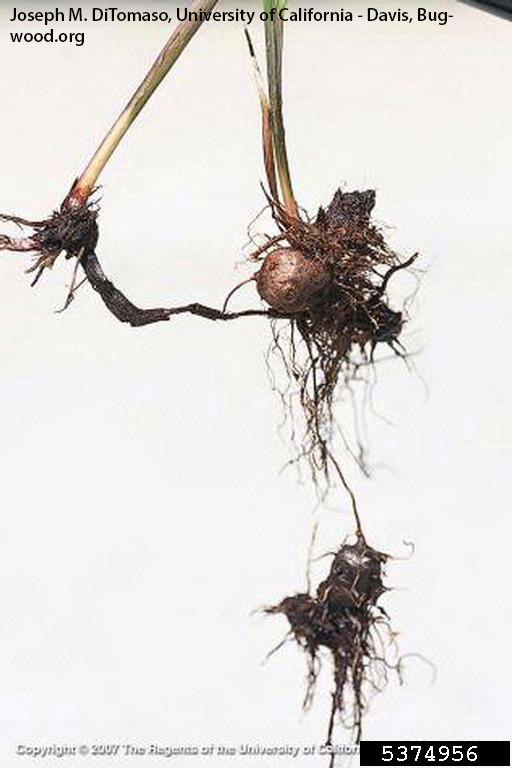
Vegetatively, though root tubers, as awell as seed
How Do I Control It?
Can be controlled by hand, if done frequently through the growing season, especially when the plants are young. Drying the area can be effective. Tilling will work if the tubers are allowed to dry and die in the sun.
For More Information
CABI Invasive Species Compendium - Cyperus rotundus
Invasive Plant Atlas information on purple nutsedge
U.S. Fish and Wildlife Service Ecological Risk Screening Summary on purple nutsedge
Additional Photos