Slender-leaved naiad
Najas minor
Family: Hydrocharitaceae
Other Common Names: brittle naiad, European naiad
Weed class: No Class
Native to: parts of Asia, Europe, and northern Africa
Is this Weed Toxic?:
not known to be
Legal listings:
This plant is on the Washington State quarantine list. It is prohibited to transport, buy, sell, offer for sale, or distribute plants or plant parts of quarantined species into or within the state of Washington or to sell, offer for sale, or distribute seed packets of seed, flower seed blends, or wildflower mixes of quarantined species into or within the state of Washington. Please see WAC 16-752 for more information on the quarantine list. For questions about the quarantine list, contact the Washington State Department of Agriculture's Plant Services Program at (360) 902-1874 or email PlantServices@agr.wa.gov.
Why Is It a Noxious Weed?
This plant is on the Washington State quarantine list. It is prohibited to transport, buy, sell, offer for sale, or distribute plants or plant parts of quarantined species into or within the state of Washington or to sell, offer for sale, or distribute seed packets of seed, flower seed blends, or wildflower mixes of quarantined species into or within the state of Washington.
How would I identify it?
General Description
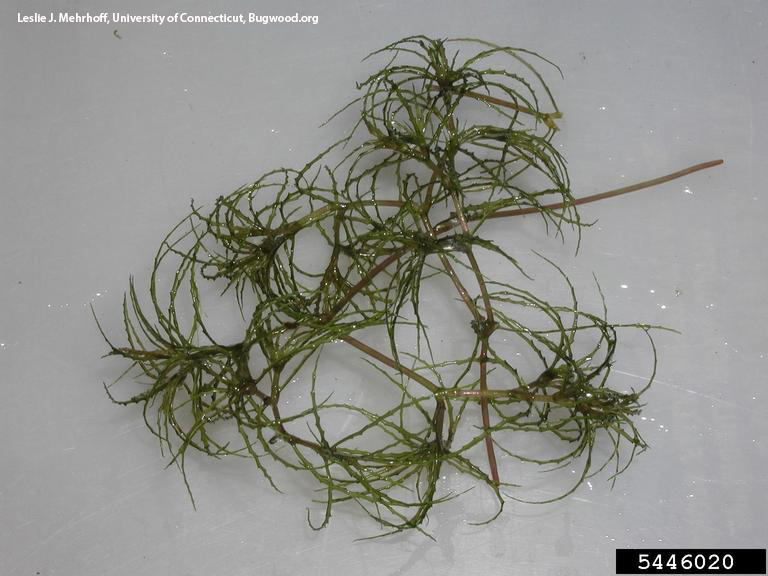
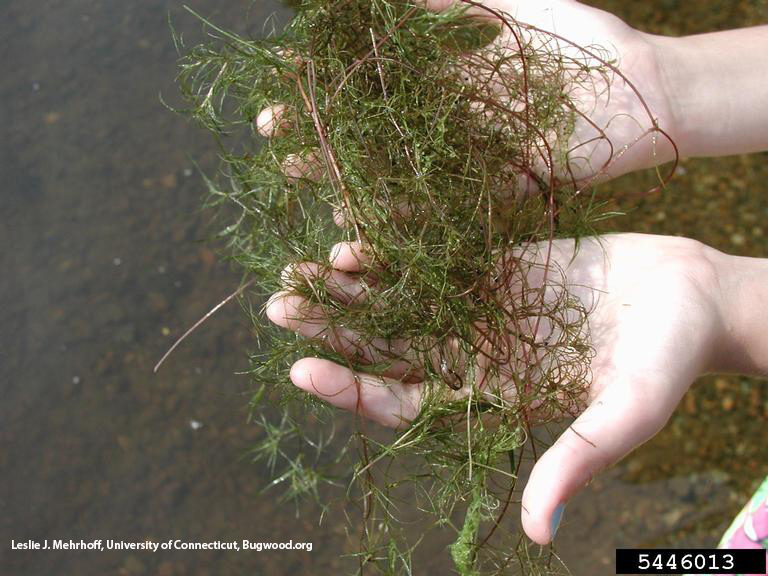
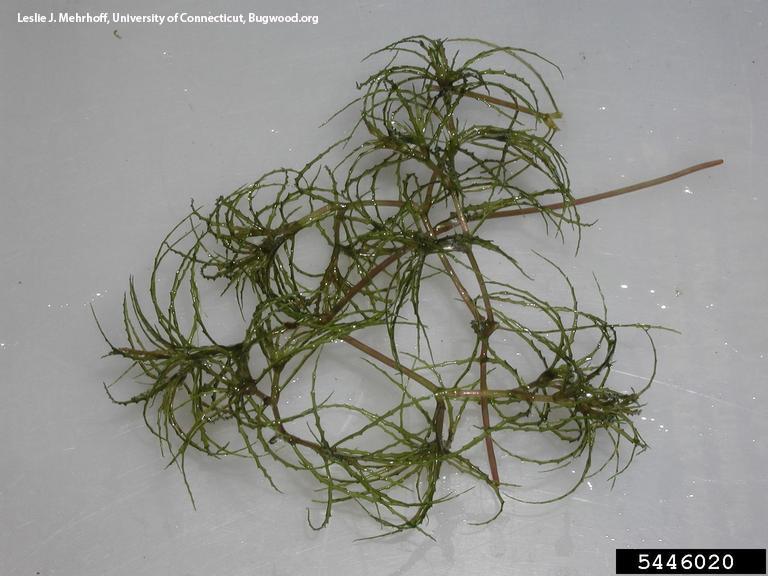
This annual, aquatic plant appears very frilly, with very breakable segments.
Flower Description
Small and grow in clusters near the leaf axils
Leaf description
Thin leaves that look similar to the stems from a distance. Upon closer inspection, the leaves are serrated
Stem description
Highly branching very thin stems, which break easily to reproduce vegetatively
Fruit Seed Description
Very small seeds that are covered in minute dimples
Where does it grow?
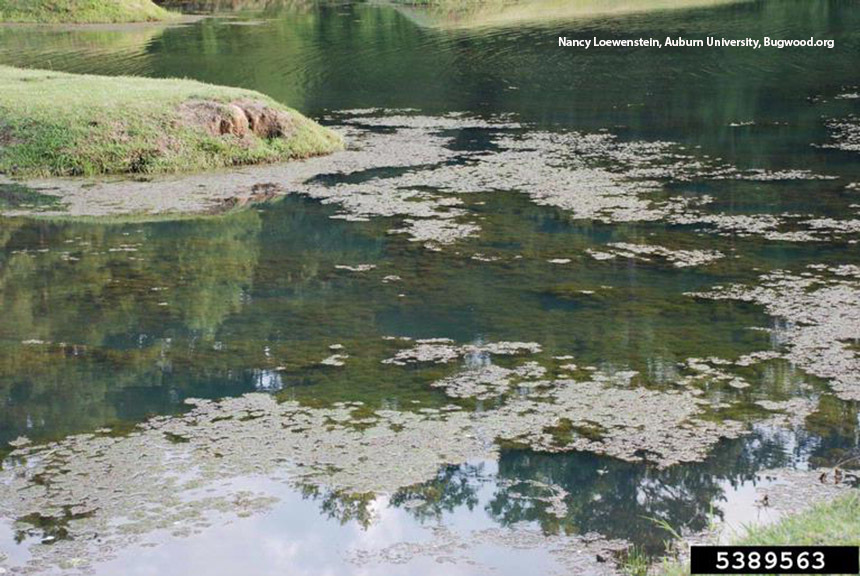
Can grow up to 12 feet below the water surface. Prefers calm water, like ponds and lakes
How Does it Reproduce?
seed and plant fragments
How Do I Control It?
Due to how brittle the stems are, it is very difficult to control this plant. A complete bilge, and sieve of the water is usually required. Once out of the water, the plants can be left to dry and die on land
For More Information
Invasive Plant Atlas of New England information on Najas minor
U.S. Fish and Wildlife information on Najas minor
Additional Photos