Water caltrap
Trapa bicornus
Family: Lythraceae
Other Scientific Names:
Trapa natans
Other Common Names: devil's pod, bat nut, horn nut
Weed class: No Class
Native to: Temperate Africa and Eurasia.
Is this Weed Toxic?:
humans
Legal listings:
This plant is on the quarantine list. It is prohibited to transport, buy, sell, offer for sale, or distribute plants or plant parts of quarantined species into or within the state of Washington or to sell, offer for sale, or distribute seed packets of seed, flower seed blends, or wildflower mixes of quarantined species into or within the state of Washington. Please see WAC 16-752 for more information on the quarantine list. For questions about the quarantine list, contact the Washington State Department of Agriculture's Plant Services Program at (360) 902-1874 or email PlantServices@agr.wa.gov.
Why Is It a Noxious Weed?
Water caltrap is not listed as a noxious weed but is on the quarantine list.
How would I identify it?
General Description
This aquatic plant has a floating crown of leaves, rooted to underwater substrate, by a long, frilly leafed stem.
Flower Description
One or two, four-petaled flowers, that are white to yellow, and grow from near the center of the crown of floating leaves.
Leaf description
Diamond shaped leaves on short stems, with serrated edges, radiating out on top of the waters surface, with fern-like leaves along the below-water stem.
Stem description
The leaves grow on short stems from the center of the rosette. There is a long stem underneath the rosette, attaching the floating leaves to the aquatic substrate.
Fruit Seed Description
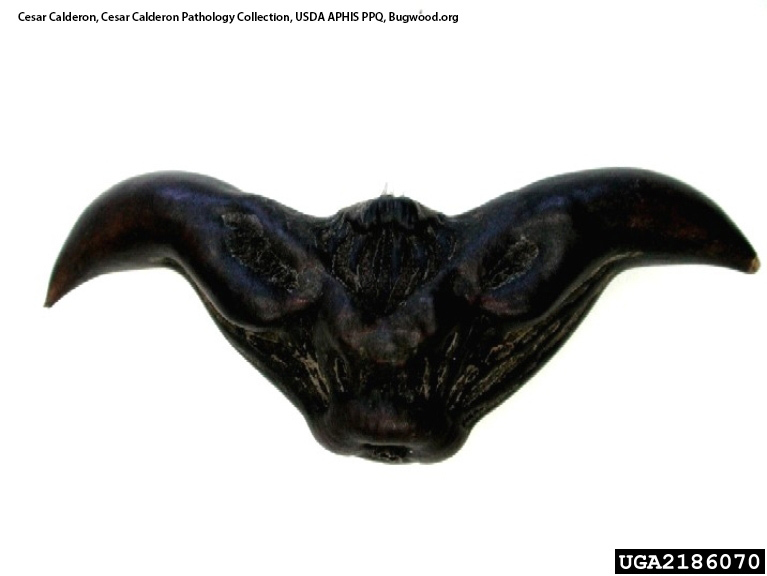
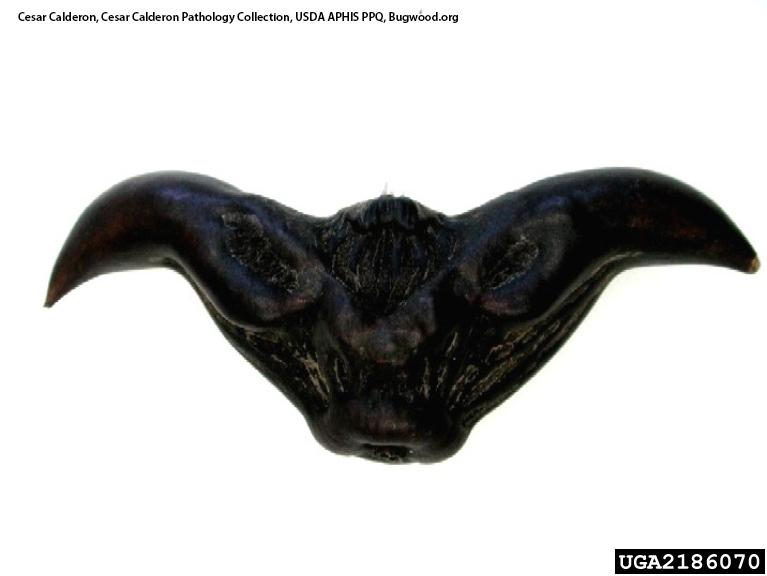
Fairly large, "Bat signal" shaped, pods, which are very robust and sharp on the wing tips.
Where does it grow?
Ponds, lakes, and bodies of fresh water.
How Does it Reproduce?
Seed
How Do I Control It?
The roots are easily pulled. Remove the entire plant, so they can not spread seeds downstream. Herbicides can be effective, but there are many regulations on herbicide use in aquatic habitats. Reach out to a professional before considering herbicide.
For More Information
See information on Trapa natans
Additional Photos